
The fragrant aroma of garlic and ginger wafts through my kitchen, pulling me back to my last travel adventure in Thailand. Inspired by that vibrant culinary experience, I couldn’t resist recreating a comforting dish that captures the heart of Thai cuisine—Thai Salmon Coconut Curry. This quick weeknight meal not only brings restaurant-quality flavors to your home but also eases the stress of busy days with its 35-minute prep time. Enjoy tender salmon nestled in a creamy coconut milk sauce, balanced by the zesty notes of lime and fresh herbs. It’s gluten-free and easily adaptable to incorporate whatever veggies you have on hand. Ready to dive into a bowl of instant comfort? Let’s get started!
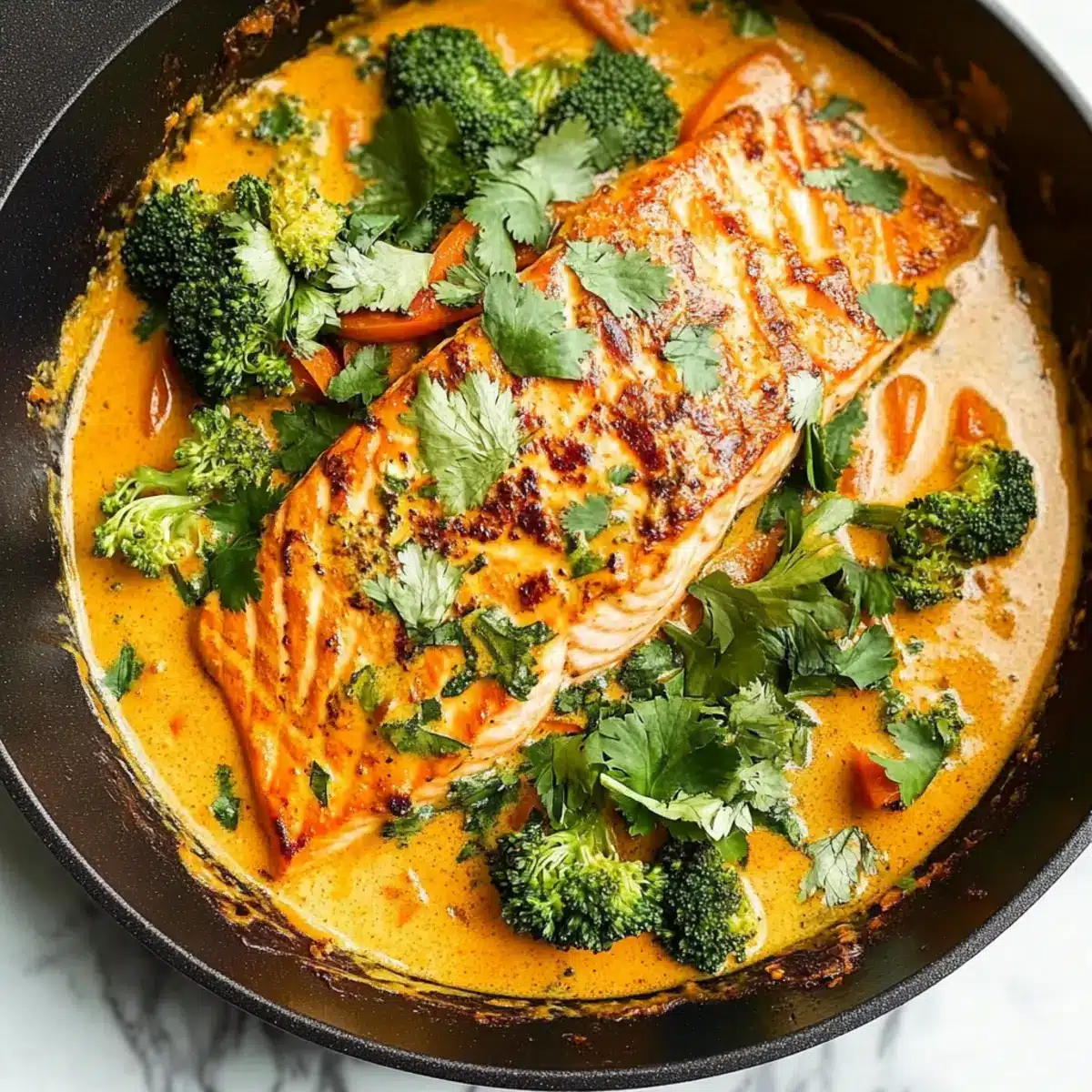
Why is Salmon Coconut Curry Amazing?
Quick and Easy: This recipe comes together in just 35 minutes, making it perfect for busy weeknights when you crave comfort food without the long prep time.
Flavor Explosion: The aromatic combination of garlic, fresh herbs, and creamy coconut milk results in a dish bursting with flavor that will impress even the toughest critics.
Versatile Base: Adapting the recipe is a breeze! You can easily swap out salmon for shrimp or chicken, or use seasonal veggies for a customized meal.
Gluten-Free Goodness: Not only is it gluten-free, but this Salmon Coconut Curry is a wholesome option anyone can enjoy, satisfying all dietary needs.
Restaurant-Quality at Home: Enjoy the feeling of dining at a fancy restaurant without ever leaving your house. Pair it with Iced Coconut Matcha for a complete Thai-inspired experience!
Salmon Coconut Curry Ingredients
For the Curry Base
- Fresh Salmon – Main protein; provides a rich, buttery flavor. Opt for any sustainable salmon variety.
- Salt & Pepper – Essential for seasoning; adjust to taste.
- Olive Oil – Cooking oil for sautéing; can substitute with vegetable oil for a neutral flavor.
- Butter – Adds richness; substitute with additional oil for a dairy-free version.
- Onion – Adds sweetness and depth; can use yellow or red onion interchangeably.
- Garlic – Provides aromatic flavor; use fresh or pre-minced garlic as available.
- Thai Red Curry Paste – Key flavor source; adjust amount for spice preference. Available in stores or homemade options.
- Fish Sauce – Enhances umami; optional but recommended. Soy sauce can substitute but will yield a different flavor.
- Coconut Milk – Creates a creamy sauce; full-fat versions yield best results for your salmon coconut curry. Opt for high-quality brands for a thicker texture.
- Brown Sugar – Balances flavors; can substitute with coconut sugar for a different sweetness profile.
For the Veggies
- Carrots – Adds crunch; matchstick cut for quick cooking. Other vegetables like bell peppers or zucchini can be swapped.
- Broccolini – Adds nutrition; can be replaced with broccoli or snap peas.
- Lime Juice – Brightens flavors; fresh lime provides the best taste.
For Garnishing
- Fresh Basil & Cilantro – Garnishes that enhance aroma and freshness; can substitute with other fresh herbs like mint.
Step‑by‑Step Instructions for Salmon Coconut Curry
Step 1: Prepare Salmon
Start by cutting the fresh salmon into four equal pieces, then pat them dry with a paper towel to remove excess moisture. Season each piece generously with salt and pepper, ensuring all sides are coated. This step is crucial for building flavor in your salmon coconut curry, so take your time to get it just right.
Step 2: Pan-Sear Salmon
Heat a skillet over medium-high heat and add a blend of olive oil and butter, allowing it to melt and heat until shimmering. Carefully place the salmon in the skillet skin-side down and cook for about 5 minutes, or until the skin is crisp and golden. Flip the salmon and continue cooking for an additional 2-3 minutes, until the salmon is nearly cooked through. Remove the salmon from the skillet and set it aside.
Step 3: Sauté Aromatics
In the same skillet, drain any excess oil, leaving just enough to sauté the aromatics. Add finely chopped onion and sauté for approximately 3 minutes, until it becomes translucent and lightly browned. Stir in minced garlic and Thai red curry paste, cooking for 1 minute until fragrant. This will create a flavorful base for your salmon coconut curry.
Step 4: Create Sauce
Pour in the fish sauce and coconut milk, followed by the brown sugar, matchstick-cut carrots, and broccolini. Bring the mixture to a gentle simmer over medium heat. Allow it to cook for about 5 minutes, stirring occasionally, until the vegetables are tender-crisp and vibrant. The creamy coconut milk will start to thicken, forming a luscious sauce.
Step 5: Finish Curry
Squeeze fresh lime juice into the skillet and gently return the salmon to the pan, spooning some sauce over each piece. Warm everything through for an additional 2-3 minutes, adjusting the seasoning with more salt or pepper if necessary. The salmon should be perfectly cooked and immersed in that divine sauce, ready to be served.
Step 6: Serve and Garnish
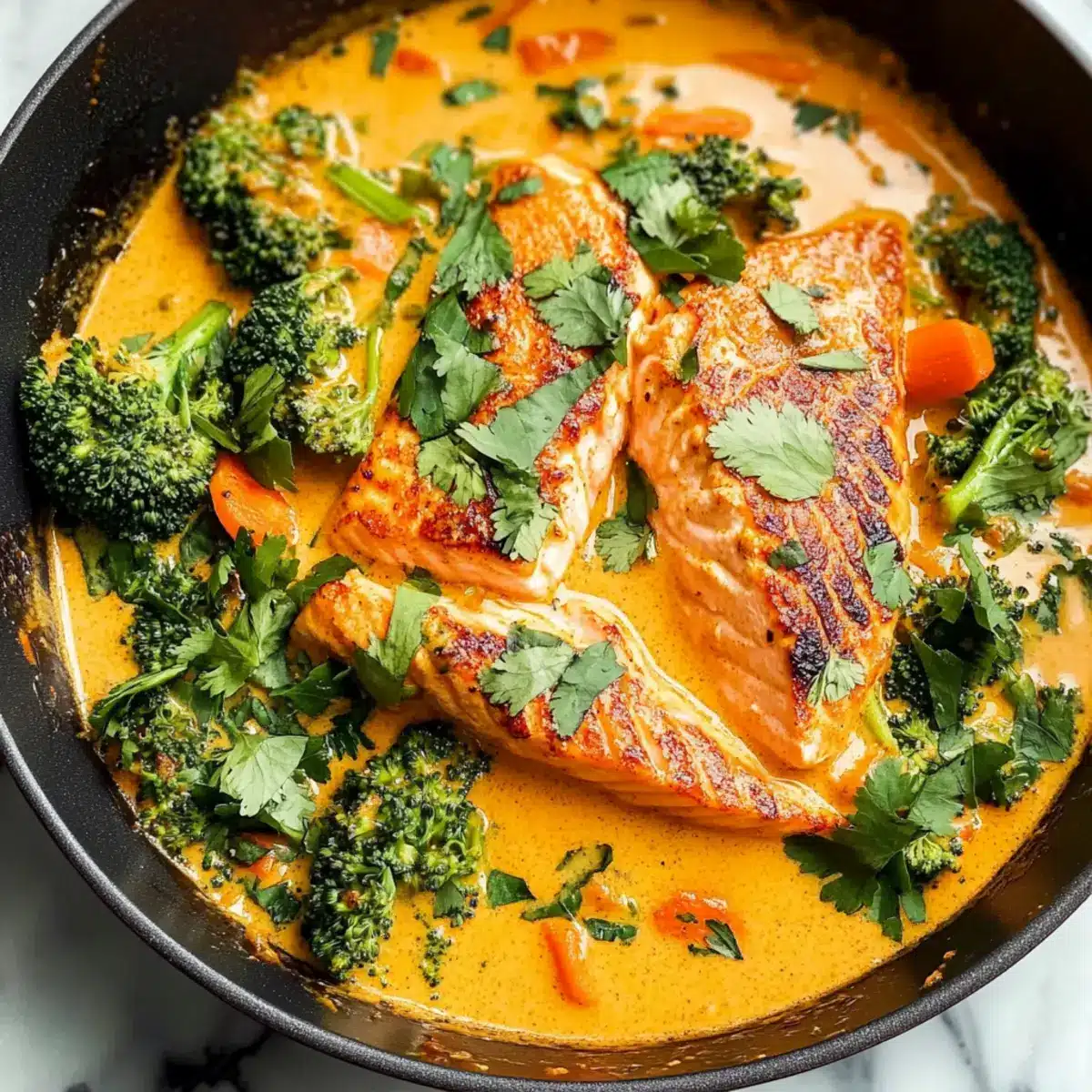
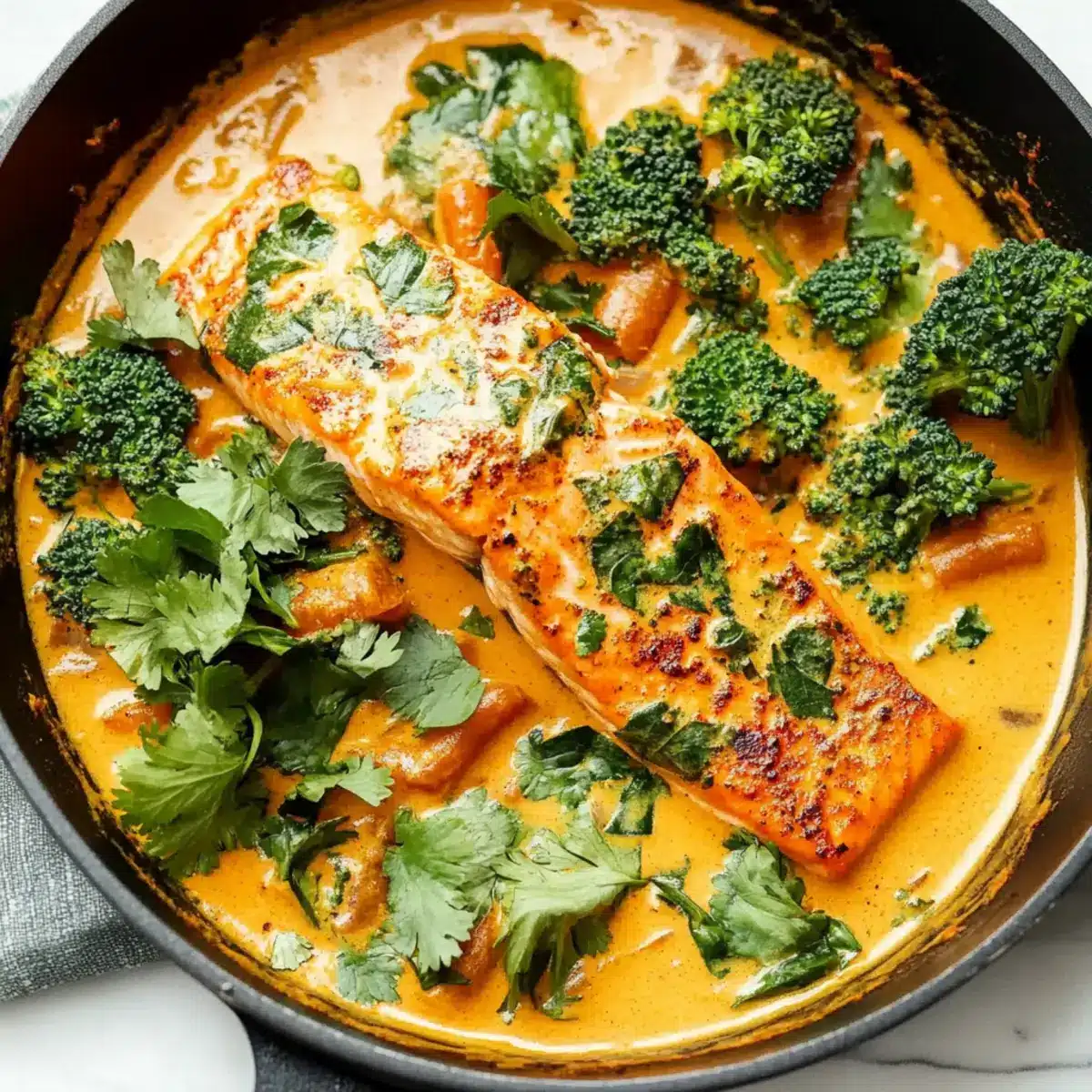
Ladle the salmon coconut curry into bowls, ensuring each serving is generously topped with the vibrant sauce and veggies. Garnish with freshly torn basil and cilantro for an aromatic finishing touch. This adds not only visual appeal but also brightens the flavors, making your home-cooked meal feel exotic and delightful!
Expert Tips for Salmon Coconut Curry
• Non-Stick Skillet: Use a non-stick skillet to avoid your salmon sticking; if it does, wait a bit longer before flipping.
• Veggie Texture: Watch your cooking time! Overcooked vegetables lose their vibrant color and crunch; aim for tender-crisp for your salmon coconut curry.
• Flavor Balance: Don’t skimp on the fish sauce! It enhances umami flavors significantly, but adjust according to your taste preferences for a perfect balance.
• Adjusting Spice: If you want more kick, gradually add extra Thai red curry paste to the sauce. Start small; you can always add more!
• Make-Ahead Option: If preparing this dish in advance, store the curry without the salmon. Add it just before serving to keep it fresh and tender.
• Experiment with Veggies: Make it your own! This salmon coconut curry is versatile; try adding seasonal veggies you love for a personalized touch.
Make Ahead Options
These Thai Salmon Coconut Curry preparations are perfect for busy home cooks looking to save time! You can prep the vegetables—carrots and broccolini—up to 3 days in advance by chopping them and storing in an airtight container in the refrigerator. Additionally, you can season the salmon and store it in the fridge for up to 24 hours before cooking to deepen the flavors. When you’re ready to enjoy your meal, simply sauté the aromatics, create the sauce, and gently warm the prepped ingredients together. This way, you can enjoy a delightful and comforting salmon coconut curry with minimal effort on a hectic weeknight!
What to Serve with Salmon Coconut Curry
When exploring the delights of Thai flavors, complementing your dish with tasty sides turns an ordinary meal into an extraordinary experience.
- Steamed Jasmine Rice: This fluffy rice absorbs the luscious coconut curry sauce perfectly, providing a comforting base for the dish.
- Quinoa Salad: The nutty texture of quinoa adds an earthy element, enhancing the meal while keeping it gluten-free and nutritious.
- Simple Cucumber Salad: A refreshing side that offers a satisfying crunch, balancing the richness of the curry with its light, tangy notes.
- Garlic Naan Bread: This warm and pillowy bread is perfect for scooping up the salmon coconut curry, making every bite a joyful indulgence.
- Mango Sticky Rice: Sweet and creamy, this traditional Thai dessert provides a delightful contrast to the savory curry, wrapped in a delicate finish.
- Chilled Thai Iced Tea: Creamy and subtly sweet, this beverage marries beautifully with the spicy undertones of the curry, elevating the meal experience.
- Thai Veggie Spring Rolls: These light and crunchy rolls bring freshness and texture, offering a delightful contrast to the rich curry for added variety.
- Grilled Asparagus: Lightly charred, the smokiness complements the salmon while adding a pop of color to your plate; a healthy, elegant choice.
- Coconut Chia Pudding: For dessert, this creamy and refreshing treat is a perfect palette cleanser after the vibrant flavors of your salmon coconut curry.
Variations & Substitutions for Salmon Coconut Curry
Feel free to get creative and customize this dish to fit your cravings and pantry staples!
-
Shrimp Swap: Use shrimp instead of salmon for a quicker-cooking protein. Simply adjust the cooking time for delicate shrimp to keep them tender.
-
Vegetable Medley: Swap out carrots and broccolini for your favorite seasonal vegetables, like bell peppers or zucchini, to add color and nutrition. The more, the merrier in your curry!
-
Dairy-Free Delight: For a completely dairy-free version, replace butter with an extra splash of olive oil or coconut oil, maintaining that rich flavor without dairy.
-
Zingy Citrus: Infuse more brightness! Add some zest from the lime before squeezing for an extra citrusy kick that enhances the overall flavor profile.
-
Heat It Up: If you’re a fan of spice, throw in some fresh chili or a sprinkle of red pepper flakes to elevate the heat level. Adjust according to your taste!
-
Coconut Creamy: For a richer, creamier sauce, opt for full-fat coconut milk instead of light coconut milk. The added creaminess really rounds out the curry for pure comfort.
-
Protein Power: Swap salmon with diced chicken or tofu for another delicious protein option. Just be sure to adjust cooking times accordingly to ensure everything is cooked through.
-
Savor the Umami: If you’re looking for depth, introduce a dash of soy sauce or tamari along with the fish sauce to amplify that umami goodness.
Whether you decide to whip up a comforting batch of Thai Fish Curry or indulge in some Baked Teriyaki Salmon, these variations will make your Salmon Coconut Curry feel uniquely yours!
Storage Tips for Salmon Coconut Curry
-
Fridge: Store any leftover salmon coconut curry in an airtight container in the fridge for up to 2 days. Make sure it’s completely cooled before sealing to maintain freshness.
-
Freezer: For longer storage, freeze the curry without the salmon for up to 3 months. Allow it to cool completely, then transfer it to a freezer-safe container.
-
Reheating: When ready to enjoy, thaw in the fridge overnight and reheat gently on the stovetop, adding a splash of coconut milk to keep it creamy and flavorful.
-
Leftover Salmon: If you have salmon leftovers, it’s best to eat them within 24 hours to enjoy the best texture and flavor. Reheat carefully to avoid drying it out.
Salmon Coconut Curry Recipe FAQs
What kind of salmon should I use for this curry?
Absolutely! When selecting salmon, look for fresh, sustainable options such as wild-caught Alaskan salmon or responsibly farmed varieties. These choices provide a rich, buttery flavor that elevates your curry. If you prefer a milder taste, you can also opt for sockeye salmon, which holds up nicely against the robust flavors of the coconut curry.
How should I store leftovers from the salmon coconut curry?
I recommend storing any leftover salmon coconut curry in an airtight container in the refrigerator for up to 2 days. Ensure the curry is completely cooled before sealing it to maintain freshness. When reheating, do so gently on the stovetop to prevent the salmon from drying out.
Can I freeze salmon coconut curry?
Very! To freeze the curry, it’s best to do so without the salmon. Allow the curry to cool completely, then pour it into a freezer-safe container. It can be frozen for up to 3 months. When you’re ready to enjoy it, thaw it in the fridge overnight, then reheat on the stovetop, stirring in a splash of coconut milk for creaminess.
What can I do if my vegetables are overcooked?
If you find that your vegetables have turned mushy, don’t worry! Sauté them for a shorter time next round, aiming for that tender-crisp texture. You can also add fresh veggies right before serving for added crunch and color. Mixing in a handful of fresh spinach or snap peas at the last minute can brighten the dish!
Is this recipe suitable for those with dietary restrictions?
Absolutely! Not only is this salmon coconut curry gluten-free, but it is also easily customizable for various dietary needs. You can substitute the fish sauce with soy sauce for a vegan option or replace the salmon with tofu, chicken, or shrimp for different proteins. Just ensure to test for any allergies with your ingredient substitutions.
How do I adjust the spice level in the curry?
If you like a little heat, you can increase the amount of Thai red curry paste gradually. Start by adding a teaspoon more, taste it, and continue adding until you reach your desired spice level. If you find it too spicy, a splash of coconut milk or an extra tablespoon of brown sugar can help balance out the heat.
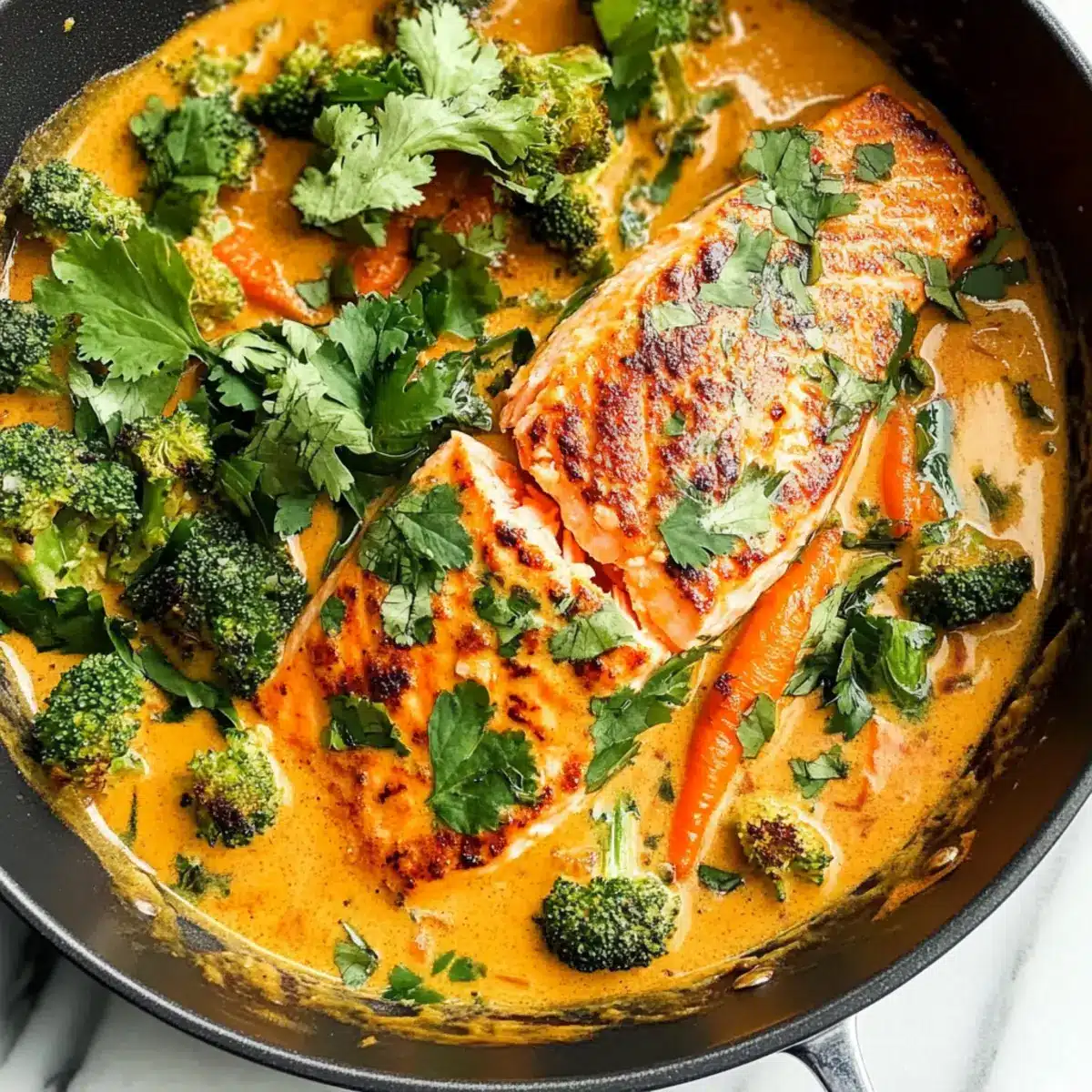
Savory Salmon Coconut Curry Ready in 35 Minutes
Ingredients
Equipment
Method
- Prepare the salmon by cutting it into four equal pieces, patting dry, and seasoning with salt and pepper.
- Pan-sear the salmon in a skillet with olive oil and butter until skin is crisp, about 5 minutes; flip and cook for another 2-3 minutes.
- Sauté onions in the same skillet until translucent, then add garlic and Thai red curry paste, cooking until fragrant.
- Create the sauce by adding fish sauce, coconut milk, brown sugar, carrots, and broccolini. Simmer until veggies are tender-crisp.
- Finish by adding lime juice and return the salmon to the skillet, spooning sauce over to warm through.
- Serve in bowls topped with sauce, veggies, and garnished with basil and cilantro.
Leave a Reply