
Aromatic spices wafted through the crowded streets of Seoul, pulling me toward a bustling food stall where laughter mingled with sizzling sounds. There, I discovered the magic of Tteokbokki – a delightfully chewy Korean street food that has since captivated my heart and my kitchen. With its warm embrace of comfort, this recipe brings together soft rice cakes and savory fish cakes drenched in a spicy, Sweet sauce crafted from gochujang and gochugaru. Best of all, you can whip up this flavorful dish in just 35 minutes, making it an ideal choice for those cozy nights or when cravings strike! Whether you’re looking to indulge or impress, Tteokbokki is a true crowd-pleaser that can easily be adapted for vegan variations. Are you ready to dive into this culinary adventure?
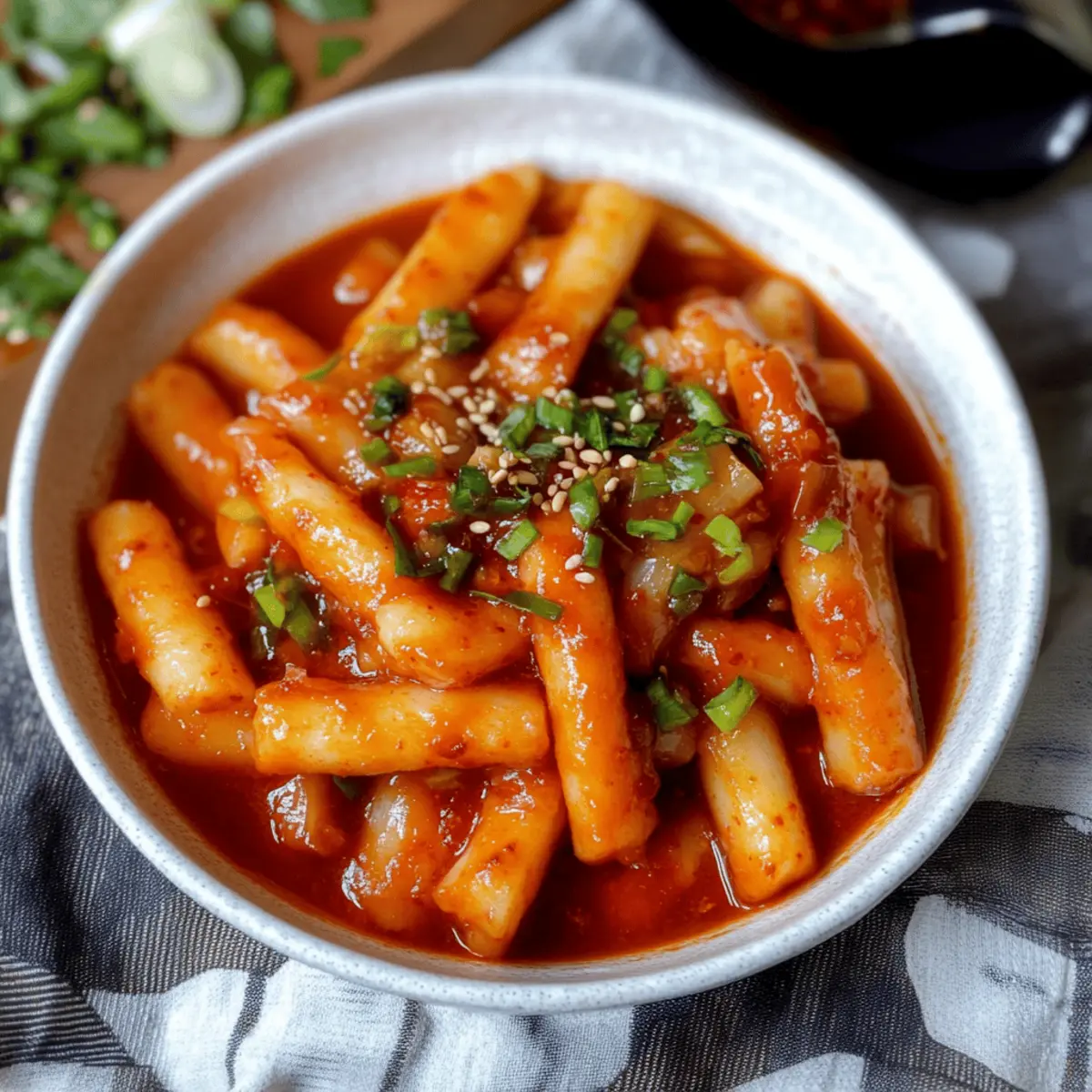
Why is Tteokbokki a Must-Try?
Irresistible Flavor: The blend of spicy gochujang and savory fish cakes creates a vibrant taste explosion that will have your taste buds dancing.
Quick & Easy: With a total prep time of just 35 minutes, this dish is perfect for those busy weeknights when you crave something delicious yet effortless.
Customizable Options: Whether you prefer vegan, spicy, or a milder version, there’s room for creativity! You can swap fish cakes for tofu to cater to your dietary preferences.
Fun & Interactive: Enjoying Tteokbokki is a social experience; perfect for sharing during game nights or casual gatherings. Pair it with light banchan like kimchi for a complete meal.
Authentic Experience: This dish brings the essence of Korean street food right to your kitchen, recreating the joy of street food stalls at home. Don’t miss out on making your own vegan dashi for a delightful twist!
Tteokbokki Ingredients
For the Rice Cakes
• Tteokbokki (Korean rice cakes) – These chewy rice cakes are essential for the dish; you’ll find them easily at Asian grocery stores.
For the Broth
• Anchovy stock or water – This serves as the base for a rich broth; opting for water is perfect for a vegetarian or vegan option.
• Dried kelp – Adds depth and umami flavor to the broth; remember to remove it after boiling.
For the Sauce
• Gochujang (Korean red chili paste) – The star ingredient that infuses the dish with its signature spice and flavor.
• Gochugaru (Korean chili pepper flakes) – Provides additional heat and a beautiful red color to the sauce.
• Soy sauce – Adds saltiness and a savory umami punch; swap for gluten-free soy sauce or tamari for a gluten-free variation.
• Sugar – Helps balance the spiciness of gochujang and enhances overall flavor.
For the Protein
• Korean fish cakes – They bring a delightful texture and protein to the dish; rinse and slice before adding for best results.
Finishing Touches
• Toasted sesame oil – Gives a nutty aroma and rich flavor to the final dish.
• Scallions – Adds freshness and a mild onion flavor, bringing the dish to life.
• Sesame seeds – Ideal for garnish and adds a pleasant crunch!
Now you’re ready to create the deliciousness that is Tteokbokki! Dive in and let your kitchen fill with the enticing aroma of this traditional Korean treat.
Step‑by‑Step Instructions for Tteokbokki
Step 1: Make the Broth
In a medium pot, combine 4 cups of anchovy stock or water with a piece of dried kelp. Bring the mixture to a boil over medium-high heat, then reduce the heat to low. Remove the kelp after 5 minutes, allowing the broth to simmer uncovered for 10 minutes to enhance its flavor.
Step 2: Season the Broth
Vigorously stir in 3 tablespoons of gochujang, 1 tablespoon of gochugaru, 2 tablespoons of soy sauce, and 1 tablespoon of sugar into the simmering broth. Increase the heat back to medium and let this mixture boil for about 2 minutes. You’ll see a vibrant red color develop, enriching the broth for the tasty Tteokbokki.
Step 3: Cook the Rice Cakes
Add 1 pound of tteokbokki (Korean rice cakes), stirring well to coat them in the spicy broth. Cook for 8 to 10 minutes, stirring frequently, until the rice cakes become soft and chewy. They should be tender but still retain their shape, absorbing all the delicious flavors from the broth.
Step 4: Add Fish Cakes
Incorporate 1 cup of rinsed and sliced Korean fish cakes into the pot with the rice cakes. Continue cooking for an additional 4 minutes, stirring continuously to ensure even cooking and blending of flavors. The fish cakes should heat through and soften while mingling with the spicy sauce.
Step 5: Serve the Tteokbokki
Once everything is cooked to perfection, turn off the heat and mix in 1 tablespoon of toasted sesame oil and chopped scallions for added freshness. Transfer the hot Tteokbokki to a serving bowl and sprinkle with sesame seeds for garnish. Serve immediately to experience the delightful texture and flavor fully!
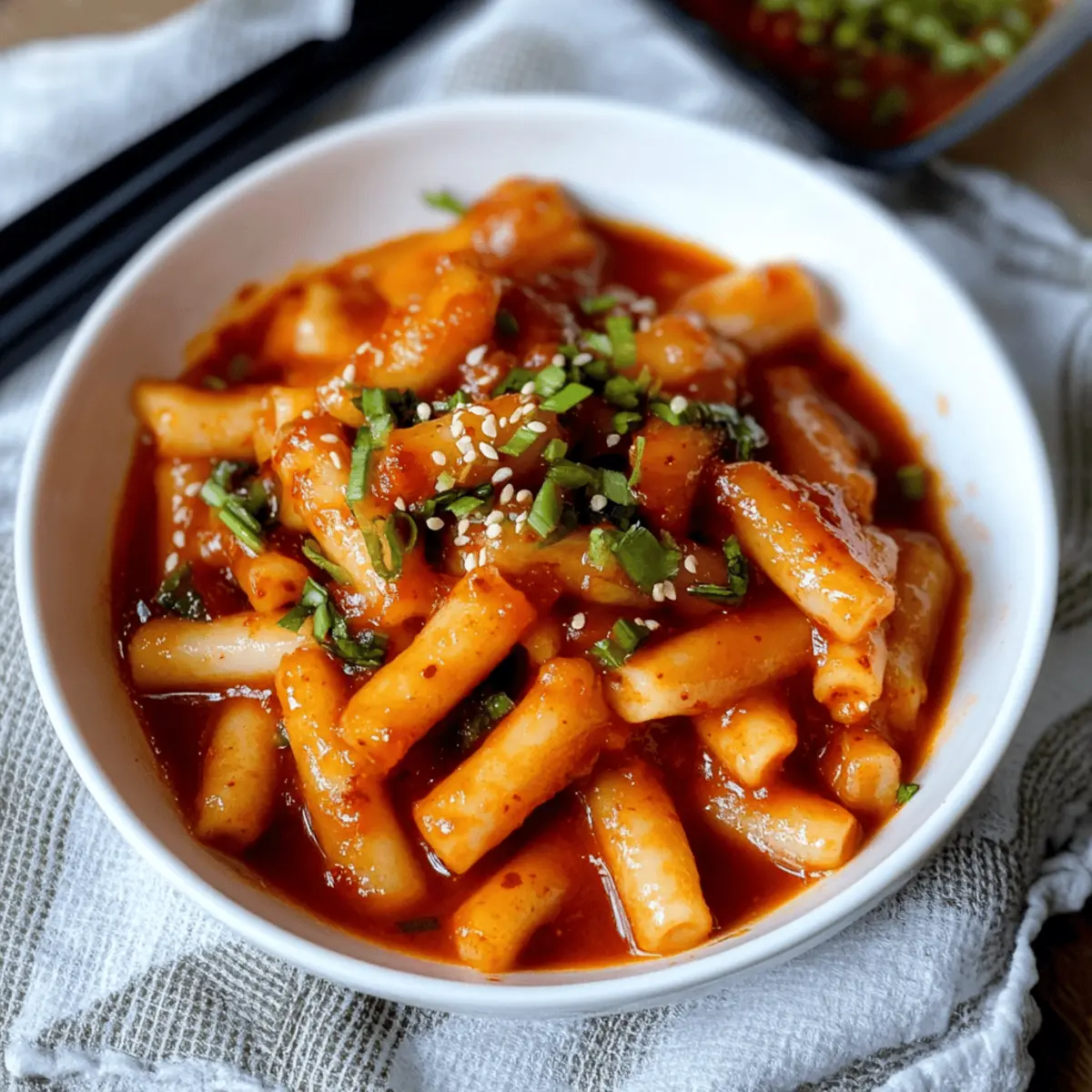
What to Serve with Authentic Tteokbokki?
Indulge in a complete culinary experience with dishes that enhance the vibrant flavors of your spicy Korean rice cakes.
-
Korean Fried Chicken: Crispy and savory, this classic dish adds a delightful crunch and complements the Tteokbokki’s spiciness beautifully. Pairing fried chicken with Tteokbokki creates a meal bursting with textures and flavors that will keep everyone coming back for more.
-
Kimchi: A staple in Korean cuisine, kimchi offers a tangy and spicy flavor that balances the richness of Tteokbokki. Its fermented goodness not only enhances your meal’s overall profile but also provides probiotic benefits.
-
Pickled Radishes: These sweet and tangy bites refresh the palate and make for a perfect contrast to the heat of Tteokbokki. Their crunch adds a delightful textural contrast, making your dining experience even more enjoyable.
-
Steamed Dumplings: Savory and pillowy, dumplings filled with meat or vegetables create a harmonious pairing with Tteokbokki. Together, they transform your meal into a delicious feast, ideal for sharing with family and friends.
-
Spicy Seafood Soup: This hearty soup, filled with fresh seafood and spices, enhances the bold flavors of Tteokbokki. It not only adds a warm, comforting element to the meal but also complements the spiciness of the rice cakes.
-
Soju or Makgeolli: Sip on these traditional Korean drinks to elevate your dining experience. Their refreshing flavors help cut through the richness of the meal, making for a well-rounded and enjoyable pairing.
-
Sesame Garlic Noodles: Tossed in a flavorful sesame oil and garlic sauce, these noodles offer a delightful umami element to your spread. Their softer texture pairs perfectly with the chewy rice cakes, creating a balanced meal experience.
Tteokbokki Variations & Substitutions
Feel free to explore these delightful variations that elevate your Tteokbokki experience, opening a world of flavors and textures!
-
Vegan Option: Swap fish cakes for sliced tofu or aburaage, creating a delicious plant-based version that retains the dish’s essence. This twist brings tenderness and rich flavor without compromising on taste.
-
Gluten-Free: Use gluten-free tamari instead of soy sauce to enjoy Tteokbokki while catering to gluten sensitivities. You’ll still receive all the delightful umami flavors!
-
Extra Heat: Add more gochugaru or sprinkle some sliced fresh chili peppers to turn up the heat and satisfy those with a fiery palate. Spicy lovers won’t be able to resist!
-
Umami Boost: Incorporate sliced shiitake mushrooms or a sprinkle of mushroom seasoning to enrich the broth’s savory depth. This substitution adds complexity and enhances the overall taste.
-
Creamy Twist: For a sumptuous alteration, try blending in a little coconut milk or adding vegan cream cheese. This twist creates a richer, creamier sauce for your Tteokbokki experience.
-
Sweet Potato: Toss in chunks of sweet potato to simmer with the rice cakes for an earthy sweetness. Not only does it add a nutritious dimension, but it also pairs wonderfully with the spicy notes!
-
Vegetarian Stock: Use vegetable broth instead of anchovy stock when making the sauce for a deliciously light and veggie-friendly version of Tteokbokki.
-
Sichuan Inspiration: Infuse your broth with a splash of Sichuan pepper oil for a unique tangy flavor twist. This will take your taste buds on an exciting journey while enjoying your Tteokbokki.
These variations will inspire you to tailor the dish just the way you like it! Happy cooking, and don’t forget to serve it alongside some refreshing banchan like pickled radish or kimchi for a delightful meal! If you’re interested in making your own vegan dashi, it’s a fun and rewarding experience!
Expert Tips for Tteokbokki
-
Timing is Key: Serve your Tteokbokki immediately after cooking to enjoy its optimal texture; it hardens as it cools down.
-
Broth Balance: Adjust the seasoning of your broth gradually. Taste it after adding gochujang and soy sauce, ensuring it aligns with your preferred spiciness and saltiness.
-
Simple Substitutions: If you’re making a vegan Tteokbokki, substitute fish cakes with tofu and use vegetable stock instead of anchovy stock for a delightful plant-based dish.
-
Cooking Technique: Stir the rice cakes gently to prevent sticking and ensure an even coating in the delectable sauce. Overstirring can lead to a mushy texture, so be mindful!
-
Serving Suggestions: Pair your Tteokbokki with light Korean banchan like pickled radishes or kimchi to balance the rich, spicy flavors of the main dish.
Make Ahead Options
These Tteokbokki are perfect for busy weeknights and meal prep enthusiasts! You can prepare the broth and slice your Korean fish cakes up to 24 hours in advance to save time. Simply refrigerate the components in airtight containers to maintain freshness. Additionally, if you’re using frozen rice cakes, soak them in water overnight before cooking to make them ready for quick preparation. When it’s time to serve, heat the broth, add the softened rice cakes and fish cakes, then cook until they’re tender, and finish with sesame oil and scallions. You’ll have a delicious, comforting meal with minimal fuss!
How to Store and Freeze Tteokbokki
Fridge: Store leftover Tteokbokki in an airtight container for up to 2-3 days. Be aware that the rice cakes may harden when refrigerated.
Freezer: For longer storage, freeze portions of Tteokbokki in freezer-safe bags or containers for up to 1 month. Ensure they are well-sealed to prevent freezer burn.
Reheating: To reheat, thaw in the fridge overnight, then warm gently in a saucepan over medium heat. Add a splash of water or broth to restore moisture and prevent sticking.
Make-Ahead Tips: If you’re planning to prepare Tteokbokki in advance, cook the rice cakes separately and mix them with the sauce just before serving for the best texture.
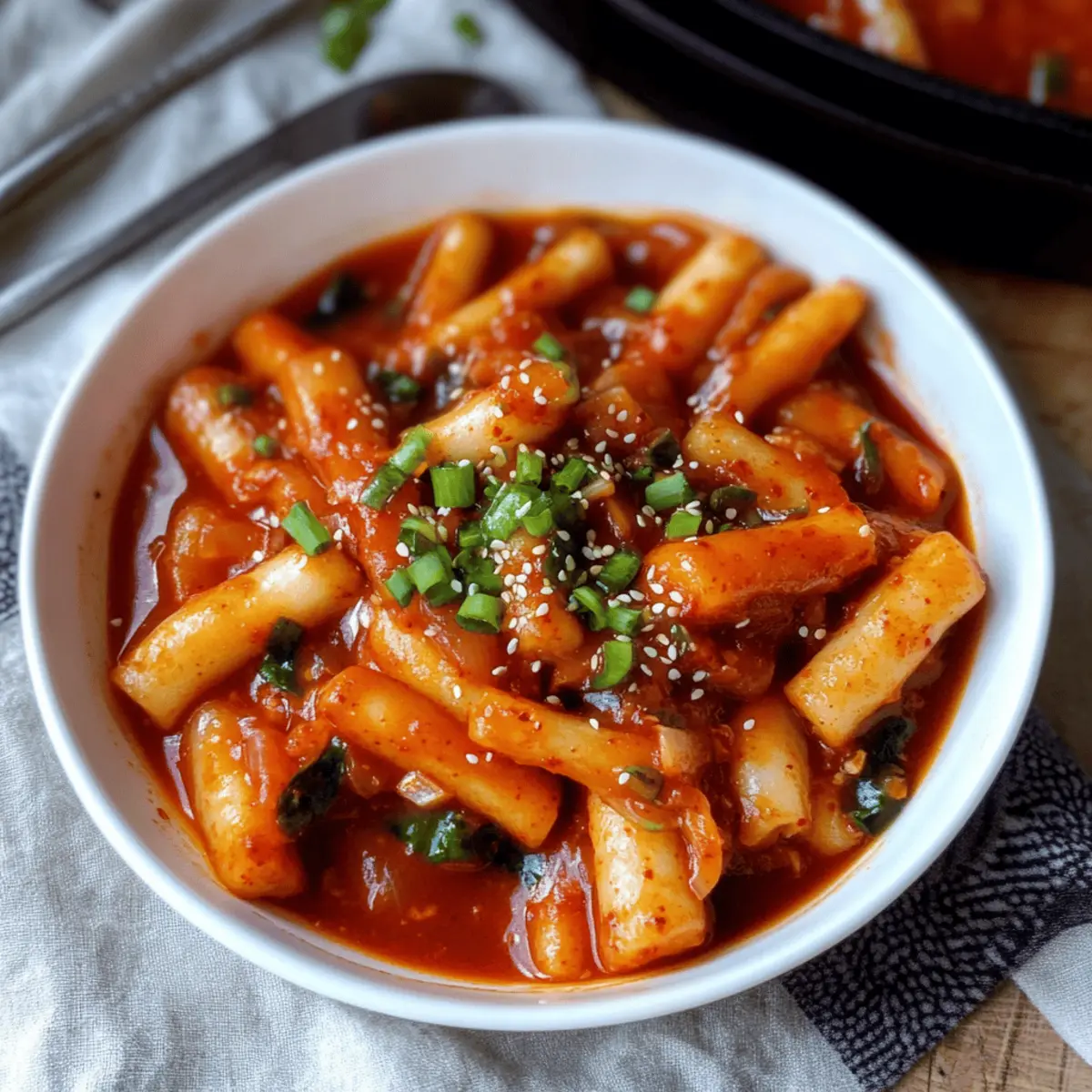
Tteokbokki Recipe FAQs
What type of rice cakes should I use for Tteokbokki?
Absolutely! You should use Tteokbokki (Korean rice cakes), which provide that essential chewy texture. These can typically be found in Asian grocery stores, and frozen rice cakes are great options. Just make sure to thaw them before cooking, or if they’re fresh, they are good to go straight into your dish!
How should I store leftover Tteokbokki?
It’s recommended to keep leftover Tteokbokki in an airtight container in the fridge for up to 2-3 days. Keep in mind that the rice cakes may harden a bit during storage, so consider enjoying it fresh for the best texture!
Can I freeze Tteokbokki?
Yes, you can! For longer storage, freeze portions of Tteokbokki in freezer-safe bags or containers. They are good for up to 1 month. Just be sure to seal them tightly to avoid freezer burn. When you’re ready to enjoy, thaw in the fridge overnight, then reheat gently in a saucepan.
What should I do if my Tteokbokki is too spicy?
Very! If your Tteokbokki ends up too spicy for your taste, you can balance the heat by adding a bit more sugar to the sauce or incorporating more soy sauce. Alternatively, adding more rice cakes or fish cakes can help dilute the spice levels, creating a milder dish. Adjust gradually and taste as you go!
Are there any dietary considerations for Tteokbokki?
Absolutely! If you have dietary preferences, Tteokbokki can easily be made vegan by substituting fish cakes with tofu or Japanese aburaage (fried tofu pockets), and using vegetable stock instead of anchovy stock. Always check that your soy sauce is gluten-free if you need to accommodate those with gluten sensitivities!
How can I ensure my Tteokbokki maintains its texture?
To keep Tteokbokki’s delightful chewiness intact, avoid over-stirring while cooking. This helps prevent the rice cakes from becoming mushy. Also, it’s best to serve Tteokbokki immediately after cooking; it tends to harden as it cools. If preparing in advance, mix the cooked rice cakes with the sauce right before serving!
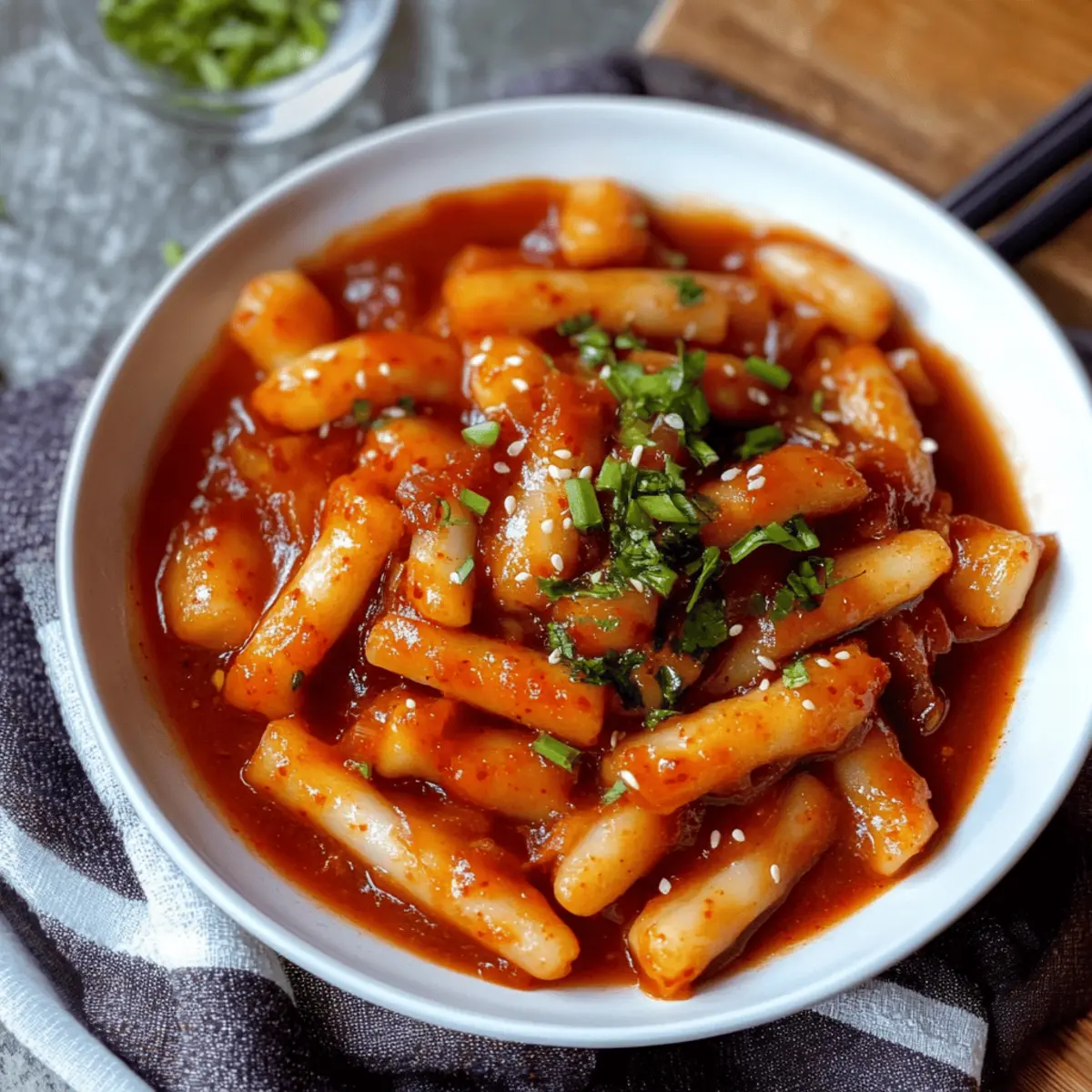
Delicious Tteokbokki in 35 Minutes – A Spicy Korean Treat
Ingredients
Equipment
Method
- In a medium pot, combine 4 cups of anchovy stock or water with a piece of dried kelp. Bring the mixture to a boil over medium-high heat, then reduce the heat to low. Remove the kelp after 5 minutes, allowing the broth to simmer uncovered for 10 minutes.
- Vigorously stir in 3 tablespoons of gochujang, 1 tablespoon of gochugaru, 2 tablespoons of soy sauce, and 1 tablespoon of sugar into the simmering broth. Increase the heat back to medium and let this mixture boil for about 2 minutes.
- Add 1 pound of tteokbokki (Korean rice cakes), stirring well to coat them in the spicy broth. Cook for 8 to 10 minutes, stirring frequently.
- Incorporate 1 cup of rinsed and sliced Korean fish cakes into the pot with the rice cakes. Continue cooking for an additional 4 minutes, stirring continuously.
- Turn off the heat and mix in 1 tablespoon of toasted sesame oil and chopped scallions for added freshness. Transfer to a serving bowl and sprinkle with sesame seeds for garnish.
Leave a Reply